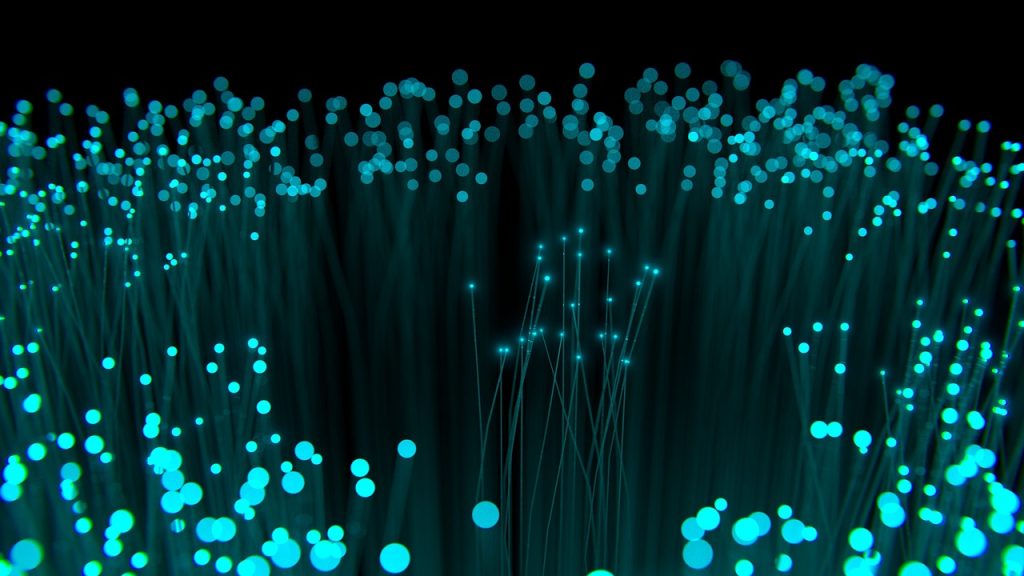
FIBRE OPTICS
Fiber optics, as a medium for transmitting data, offers numerous advantages over traditional copper wiring. Here’s a broader description along with the benefits of various fiber optics:
High Bandwidth: Fiber optics have an incredibly high bandwidth, meaning they can carry a large amount of data simultaneously. This enables faster data transmission and supports the increasing demand for bandwidth-intensive applications such as high-definition video streaming, online gaming, and cloud computing.
Low Latency: Fiber optic cables transmit data using light, which travels at nearly the speed of light in a vacuum. This results in lower latency compared to copper cables, making fiber optics ideal for applications where real-time data transmission is critical, such as online gaming, video conferencing, and financial trading.
Long Distances: Fiber optic cables can transmit data over much longer distances without experiencing signal degradation compared to copper cables. This makes fiber optics suitable for long-haul communication networks, such as undersea cables connecting continents or backbone networks connecting cities.
Immunity to Electromagnetic Interference: Unlike copper cables, fiber optic cables are not affected by electromagnetic interference (EMI) or radio-frequency interference (RFI). This makes them ideal for environments where EMI and RFI are prevalent, such as industrial settings or areas with high electrical interference.
Security: Fiber optic cables are inherently more secure than copper cables because they do not emit electromagnetic signals that can be intercepted or tapped into. Additionally, tapping into a fiber optic cable to intercept data requires physical access to the cable, making it more difficult to compromise compared to wireless or copper-based systems.
Lightweight and Flexible: Fiber optic cables are lighter and more flexible than traditional copper cables, making them easier to install and maneuver around obstacles. This flexibility allows for easier deployment in challenging environments such as urban areas or buildings with complex layouts.
Future-Proofing: Investing in fiber optic infrastructure provides a future-proof solution for meeting the growing demand for bandwidth. As internet usage continues to increase and new technologies emerge, fiber optics offer the scalability and reliability needed to support future applications and services.
Energy Efficiency: Fiber optic networks consume less power compared to traditional copper-based networks. This is because fiber optic cables have lower signal attenuation, resulting in fewer signal boosters and repeaters required along the transmission path, reducing overall energy consumption.
In summary, fiber optics offer unparalleled speed, bandwidth, security, and reliability, making them the preferred choice for high-speed internet connectivity, long-distance communication, and critical infrastructure deployments. By leveraging fiber optics, businesses and individuals can enjoy a seamless and future-proof internet experience.